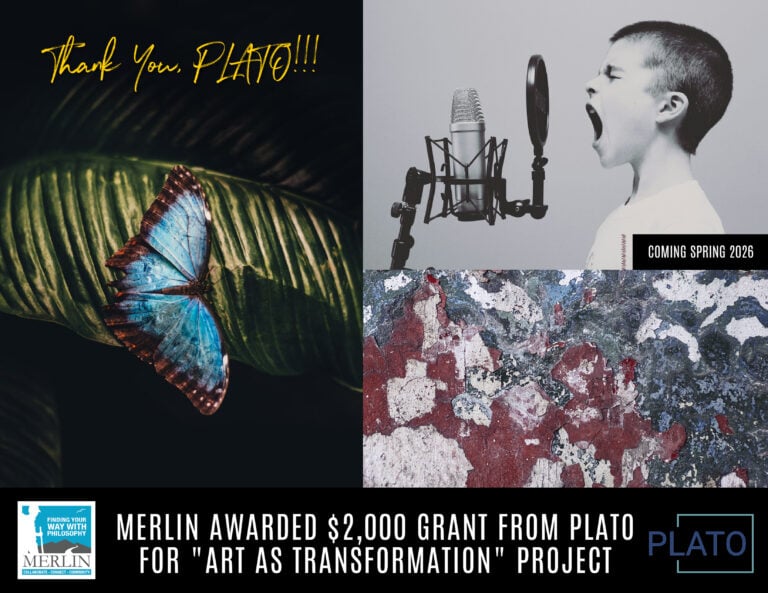
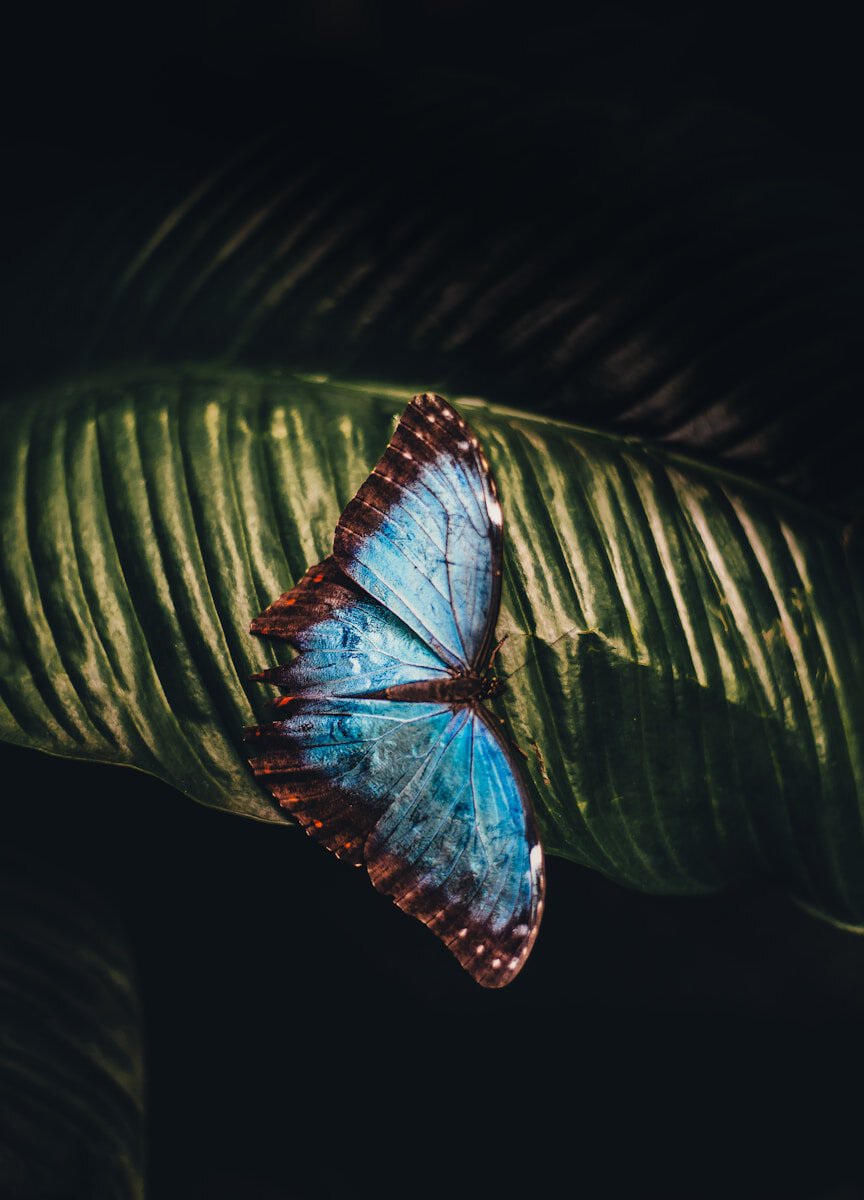
blue and brown butterfly perching on leaf
| |

Art as Transformation: A Public Philosophy Project

2026 public philosophy program

ART AS TRANSFORMATION

An interactive public philosophy program that explores the relationship between art, change, and the good life.

boy singing on microphone with pop filter

PROGRAM SYNOPSIS

An innovative public philosophy program exploring the role of art in society & our everyday lives. Featuring a unique blend of live music, story, performance & media art, and community conversation, the program invites people to consider art and its relationship to human flourishing and personal, civic, and cultural change.

PROGRAM DESCRIPTION

MAIN EVENT

Featuring live music, visual and performance art, storytelling, dialogue, and more, our “Art as Transformation” program is an innovative public philosophy project that explores the role of art in our everyday lives. Inspired by the ancient Greek concept of eudaimonia*, the program is structured around key philosophical inquiries and ideas that encourage thought and reflection and spark community conversation about art, its power to catalyze personal, civic, and cultural change, and its relationship to human flourishing and the good life.

Interactive, multi-modal, and engaging, the project features local musicians performing a unique “mash-up” of live music, inspired by historical and current events. Music will be accompanied by visual imagery and performance art that enlivens the stage, as a humanities scholar guides the audience through a rich tapestry of art, history, story, social commentary, and philosophy.

After the performance, audience members will have a chance to learn more from our guest artists and scholars through a facilitated conversation and Q & A.

Then, to close the night out, guests will be invited to commune at our program reception, enjoy continued conversation and thematic music by a guest DJ, and view original artwork from local artists who will be invited to submit and showcase pieces in response to local/national/worldwide issues as further platforms for consideration about art and the good life.

*What is Eudaimonia?

An ancient Greek concept that appears in numerous philosophical texts that, depending on one’s interpretation, means something akin to: human flourishing, the good life, living well, and /or a state of being that can be achieved over the course of one’s life (and in this way also a practice). The concept has withstood the test of time insofar as eudaimonia, its interpretations, and questions it elicits about what it is to live a good life remain relevant today. (In fact, aspects of eudaimonia are woven into the foundation of the Declaration of Independence and our U.S. Constitution!). However, the concept’s centrality, avenues for explicit cultivation, and its inclusion and general consideration in our daily discourse about life, politics, and culture have waned significantly. Our project aims to bring eudaimonia back to center stage — as a guiding light for our discourse and thinking about daily life — in ways that might help to recalibrate our aims and expectations about what it means to live well, and elucidate art and philosophy’s value and importance relative to this.
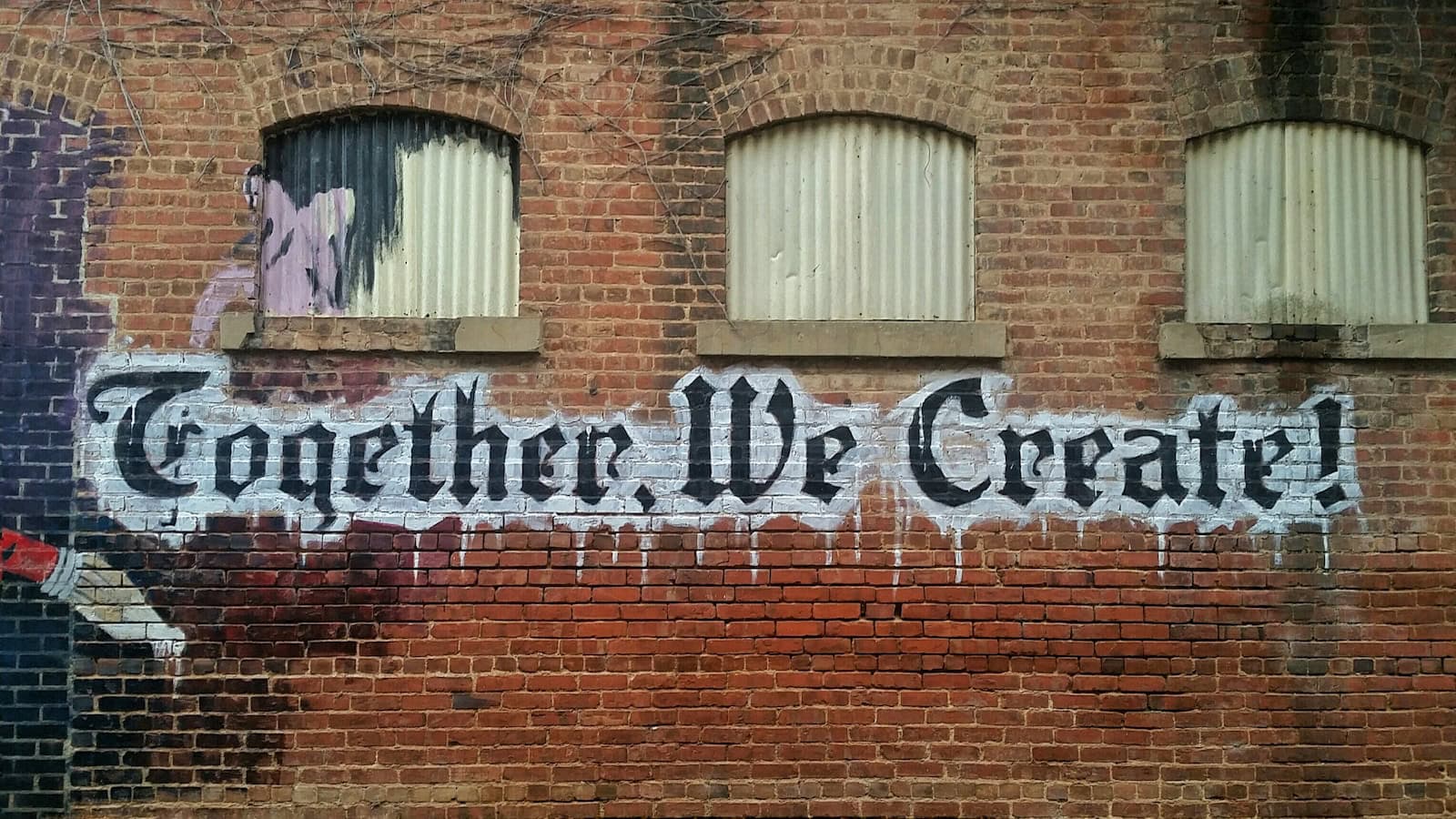
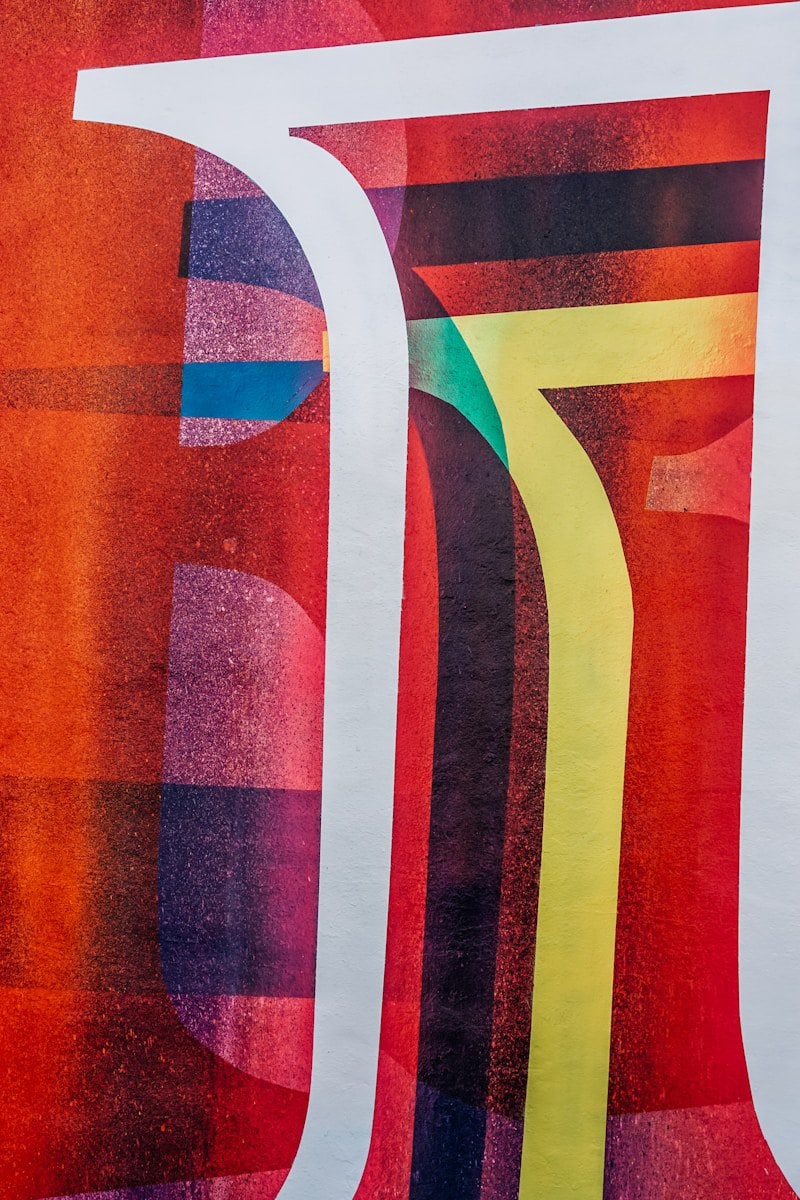
white and black Together We Create graffiti wall decor
Photo by John Matychuk on Unsplash

What would it be like to live in a world with no art? Where would we be then?

PROGRAM OPPORTUNITIES, OBJECTIVES & VALUE

Our “Art as Transformation” project serves an important role in thinking and discussion about what it means to live well & the role of art and philosophy in our everyday lives in relation to this.

What Our Program Offers
  • An immersive experience that brings to light the multi-modal and transformative nature of philosophy and art
  • A platform to explore and gain a more nuanced appreciation of art and its relationship to personal, cultural, and civic change in the arc of historical and contemporary life
  • An avenue for improved clarity and understanding about why art and philosophy are important, and how they relate to human flourishing, and eudaimonia more broadly
  • An opportunity for considering and experiencing the import and application of eudaimonia in our discourse and thinking about daily life
What We Hope to Achieve

Our project aims to provide a space for people to experience the transformative nature of art and philosophy and consider these in relation to eudaimonia. It’s format and structure invites people into a world of deep connectivity — where art, philosophy, story, history, politics, and culture intertwine — in ways that we hope will inspire critical, creative thinking and reflection about the importance of art and philosophy to human flourishing and the good life, a renewed passion (or new interest) for tapping into our creative sides, and a “recalibration” of aims and expectations for how to live one’s daily life.

Why Our Project Matters

Art is more than just a picture on a wall, a poem in a book, or a divinely inspired wind-carved landscape. Art is a portal to worlds within and worlds beyond. It is a throughline to beauty and truth, and a vital source (and voice) of our humanity.

  • Art matters in itself and because of its relationship to human flourishing and eudaimonia.
  • Eudaimonia matters in itself and because the questions it elicits and things it asks us to consider are relevant today (despite its infrequent invite into daily discourse).
  • Our project matters because it brings eudaimonia back to center stage — as a guiding light for our discourse and thinking about daily life — in ways that might help to recalibrate our aims and expectations about what it means to live well, and elucidate art and philosophy’s value and importance relative to this.
white and red textile

PROGRAM STRUCTURE

Inspired by the notion of eudaimonia, our program performances, narratives, and community conversation are structured around key philosophical inquiries that serve as anchoring entry points for critically examining our thinking about art & its value in our individual lives and society.

Some Questions We’ll Be Exploring
  • What would it be like to live in a world with no art? Where would we be then?
  • What is the nature and purpose of art?
  • How has art been used to respond to social and cultural conditions, and inspire change?
  • What does art as social commentary look like? How does this differ from art as propaganda? What can art do that other forms of social commentary cannot?
  • How are art & philosophy related? Where does aesthetics fit into this?
  • What kinds of transformations can the arts inspire? How & why?
  • How do art, philosophy, and eudaimonia intersect?
  • Why should we care about the arts?
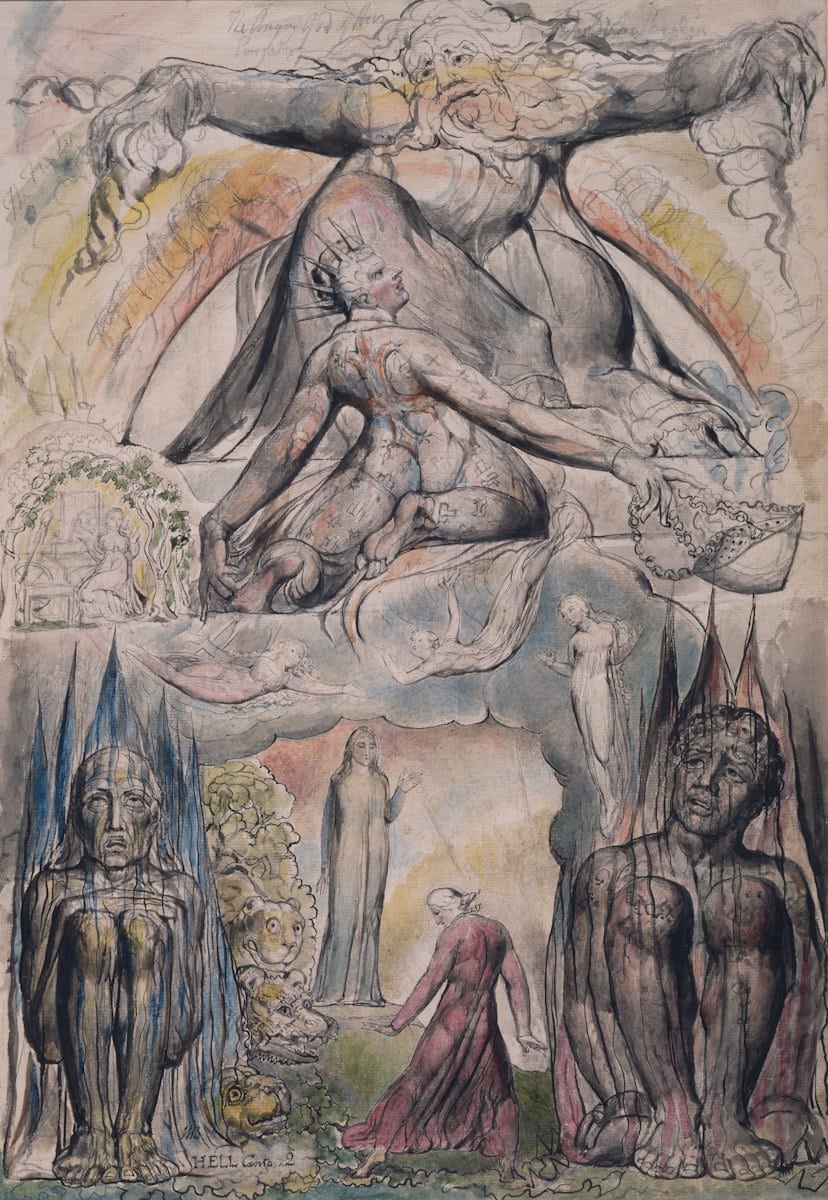
a drawing of a man surrounded by other people

PROGRAM APPROACH

Enriching & Fostering Community

Embedded in our approach to and practice of philosophy in the community, we believe that philosophy has the ability to inspire and transform. This is perhaps most notably achieved when philosophy can reveal and invite us into that shared space or common ground of our humanity. Art is a beautiful and powerful medium by which to do this. In this way, in terms of format and structure, an added purpose of our project is to cultivate a sense of togetherness and provide a bridge for critically and creatively thinking about art in ways that can enrich, inspire, and transform us, and reinvigorate eudaimonia’s centrality in our daily inquiries about what it means to live life well.
  • Program Director/Co-FacilitatorMarisa Diaz-Waian, Community Philosopher & Founder/Director of Merlin CCC
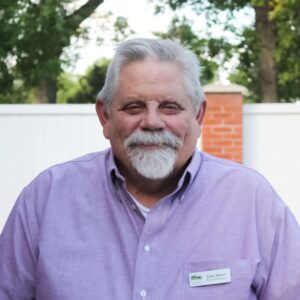
  • Program Co-DirectorBob Schmitt, Civic Engagement Scholar & Musician
  • Program Co-Creators – Barry Ferst, Aaron Parrett, John Moore, Joseph Baráz, Bob Schmitt & Marisa Diaz-Waian
  • Program Conductor/FacilitatorAaron Parrett, Philosopher, Artist, Poet & Musician
  • Program Co-Facilitator Mitch Conway, Educator & Community Philosopher, Merlin CCC
  • PanelistBarry Ferst, Artist & Philosopher
  • PanelistDaniel Kirchner, Philosopher, Photographer & Musician
  • PanelistChad Okrusch, Philosopher, Musician, Songwriter, Poet & Photographer
  • PanelistBob Schmitt, Civic Engagement Scholar & Musician
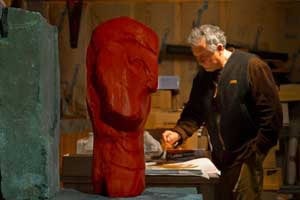
  • PanelistJoseph Baráz, Painter , Sculptor, Art Historian
  • Musicians & Performers – Bob Schmitt, John Moore, and more (TBD)
  • Community Partner/Host Christina Barbachano, Artist & Executive Director for the Holter Museum of Art
  • Local Artists (Gallery Showcase) – John Moore, Chad Okrusch, Daniel Kirchner, Barry Ferst, Aaron Parrett, Christina Barbachano, and more (TBD)
Marisa Diaz-Waian

Marisa Diaz-Waian is a community philosopher and generalist by nature, training, and practice. She has an MA in Philosophy from San Diego State University and an interest in ethics, ancient philosophy, humor, and “fuzzy” topics at the intersection of philosophy and psychology. As founder & director of Merlin CCC — a Helena-based public philosophy non-profit — her work focuses on philosophy in the community, frequently with an interdisciplinary, environmental, and intergenerational bent. Marisa serves on the academic advisory board for The Philosophy Learning & Teaching Organization (PLATO), has been a speaker for Humanities Montana, and is a facilitator/organizer for numerous activities in her community. She has also authored several published academic and public-philosphy facing works, including her chapters “Original Gangsta'” in Dave Chapelle and Philosophy: When Keeping it Wrong Gets Real (Open Universe: 2021), “Philosophy in and By the Community” in Intentional Disruption: Expanding Access to Philosophy (Vernon Press: 2021), and “Talking Shop: Invitations to a Philosophical Life” (American Association of Philosophy Teachers Studies in Pedagogy: Philosophy as a Way of Life, Vol. 6: 2021), and was featured in an American Philosophical Association Philosophy as a Way of Life interview series by Jeremy Bendik-Keymer via “Philosophy, Like Love, is for Everyone.”

Mitch Conway

Mitchell Conway is an educator and Community Philosopher at Merlin CCC. A student of philosophy, a theater maker, and a teacher who cares ardently about empowering young learners, his work often interweaves education, story, and inquiry. He has a Masters degree in Philosophy & Education from Teachers College, Columbia University, and he trained at the Institute for the Advanced of Philosophy for Children. In addition to serving on the Academic Advisory Committee for The Philosophy Learning and Teaching Organization (PLATO), he is also on the Editorial Board for the journal Questions.  

Bob Schmitt

Bob Schmitt is a civic engagement scholar whose work at CivicActions involves informaiton data collection and dissemenation systems for groups seeking to influence local, national, and international affairs. His specific areas of interest and expertise include developing and managing CRM and CMS systems to support groups engaged in public policy issues ranging from telecommunications reform, wilderness preservation, human & civil rights, legal reform & international rule of law, public energy production, transportation, national security/miltary cooperation, and crisis response at the local and international levels. In addition to his civic engagement work, Bob is also an accomplished musician who plays in local Helena bands Spare Change and Rocket to Uranus.

Aaron Parrett

Aaron Parrett is an musician, author, letterpress printer, and educator from Helena, MT. A professor of English Literature at the University of Providence in Great Falls, MT, his books include The Translunar Narrative in the Western Tradition (Ashgate, 2004), Montana: Then and Now (Bangtail, 2014), Literary Butte (History Press, 2015) and Montana Americana Music (Arcadia, 2016). Aaron won the Montana Historical Society’s Peoples’ Choice Award for his essay, “Montana’s Worst Natural Disaster,” about the devastating 1964 flood that killed 30 Native American Indians on the Blackfeet Reservation, has been featured on many radio programs, and was a featured guest on Anthony Bourdain’s Parts Unknown television segment on Butte. Aaron is also president of the Drumlummon Institute, a non-profit whose mission is “to promote and publish art and literatures created in Montana and the broader American West” and co-founder of The Territorial Press (alongside master letterpress printer and book artist, Peter Rutledge Koch). The catalogue of The Territorial Press includes Himself Adrift (2016) by Matt Pavelich, Curses (2015) by Aaron Parrett, and Maple and Lead (2017) by Aaron Parrett, featuring wood-engraved illustrations by artist Seth Taylor Roby. A songwriter and composer who first started writing songs in 1995 while living on Barber Street in Athens, GA during grad school, Aaron’s first album of original songs, The Sinners (Pizzle Records, 1996) earned critical acclaim (rereleased in 2015), yielding the song “Texas,” a song recorded by several artists, including the southern Americana band Stewart and Winfield. His songs have been featured in several Emmy-nominated documentary films, including Libby, Montana (High Plains Films, 2007) and The Naturalist (2004). A lyric from his song “El Cuchillo” is referenced in leading Steinbeck scholar Bob DeMott’s Afield: American Writers on Bird Dogs (2014). He made a full-length recording as a joint effort with IBMA songwriter of the year, Ivan Rosenberg, called Stumbo Lost Wages (Pizzle Records, 2009). In 2024, he, Jon Flynn, and John Dendy formed The State Champions, and released Independent Record.

John Moore

John Moore is a political cartoonist, Saturday Night Live in Helena writer/actor, and singer/songwriter who plays keys, guitar, and bass. Born in mid-Montana’s Harlowton from a musical family, John grew up in Great Falls and started his first garage band at age 13. He has been performing ever since, plays with several Helena musical projects (710 Ashbury being among those), and does session work in recording studios. After graduating Great Falls Central High School, he attended the University of Notre Dame where, in his sophomore year studying abroad in Innsbruck, Austria, he met his wife Ann Waickman. After graduating, John returned to Montana and began his career with Montana state government in 1976, training direct-care staff at the facility for developmentally disabled in Boulder. In 1984, he transferred to the Department of Administration in Helena, where he led management, communication, and legal training with the Professional Development Center until his retirement in 2013. Along the way, and amidst the joy of raising 4 children with Ann, he gathered a small group of Helena musicians and founded the Lost & Foundation, a small non-profit that helps individuals and families cope with medical expenses. John served on the Helena Public Art Committee for six years, helping to establish several installations in Helena. He sits on the executive board of the local musicians’ union and on the board of the Helena Community Foundation.

Joseph Baráz

Hungarian-born, Helena-based artist Joseph Baráz was born in the Baroque city of Eger. When he moved to Budapest to study acrobatics, he saw an Egyptian bronze cat from the 3rd century at the Szépmüveszéti Múseum (Museum of Fine Arts)—an experience so profound that he made the decision then to become an artist. As an acrobat, he traveled throughout Europe with the circus. Later, he and his wife Agnes escaped from the Soviet-supported socialist government, Magyar Népköztársaság, and eventually settled in San Francisco. As an artist, Baráz is largely self-taught, having gained aesthetic insights from his travels throughout Hungary, Germany, Italy, and the United States. His sculptures and paintings integrate construction refuse, architectural fragments, quarried stone, and found objects to reflect a wide range of influences—Egyptian and Cycladic sculpture, Bay-area artists Peter Voulkos and Stephen De Staebler, and 1980s neo-expressionists like Georg Baselitz, Julian Schnabel, and Cy Twombly. His artworks hover uneasily between painting and sculpture and recall the modernist pursuit of ideal perfection. Yet Baráz’s work purposefully cultivates a deliberate reliance on unfinished, uneven surfaces, recalling an architectural principle from the Renaissance called rustication—a rebellion against classical perfection that takes advantage of the tension between rough and refined surfaces. Similar to Arte Povera artists in the 1960s reacting against the refinement of modernist abstraction, Baráz rejects form and finish, preferring cast-off, common materials. Speaking about the history of cardboard as an artistic material, Baráz references artists like Robert Rauschenberg and Sigmar Polke. Baráz purposefully cultivates an unfinished quality and consciously avoids, as he says, any “manifestations of technique or pattern.” Instead, he responds to his materials without forethought, preferring “unthought” and spontaneous reaction. Baráz’s artistic practice is serial, focusing on a few areas of inquiry: totems, defined as sacred objects or symbols that serves as an emblem, and stelae (from the Greek meaning shaft or pillar), stone slabs or columns typically bearing a commemorative inscription or relief and used as a monument. These take the form of spiritual tools (hand-held pieces of worked stone), expressionistic paintings, and enigmatic found-object sculptures.

Chad Okrusch

Chad Okrusch is a Montana songwriter, poet, photographer, and teacher. A fifth-generation Montanan, his music and writing are rooted in the landscapes and stories of the West. He’s played at festivals like Red Ants Pants, the Montana Folk Festival, and Red Lodge and Whitefish Songwriter Festivals, and has shared the stage with artists ranging from Robert Earl Keen to Blake Shelton. Chad loves collaborating with fellow Montana musicians, and his songs—captured on his album Wisdom Road—speak to the humor, heartbreak, and beauty of everyday life. He’s also co-authored Butte: Then and Now and co-edited Wisdom River: Meditations on Flyfishing and Life Midstream. When he’s not making music or writing, Chad teaches philosophy and communication at Montana Tech, where he works with students on questions of ethics, meaning, and how we live together in community. Visit his website here: https://www.chadokrusch.com/

Daniel Kirchner

Daniel Kirchner is a Senior Lecturer in the Lewis Honors College at the University of Kentucky. Bozeman, MT born and raised, Daniel holds a B.A. in international relations and German (Johns Hopkins University), an M.T.S. in 19th century philosophy and theology (Harvard University), and a Ph.D. in philosophy (Indiana University). His research is focused on the history of philosophy and ethics. Daniel has spent the last ten years developing innovative teaching in the classroom and collaborating on interdisciplinary curricula and has experience teaching a wide range of courses in the humanities, including introduction to ethics, environmental ethics, food ethics, biomedical ethics, ethical theories, and 19th century philosophy. Aiming to integrate classroom instruction with mentoring and extra-curricular activities, his teaching emphasizes a historical focus on primary text material and experiential engagement with contemporary ethical issues. In addition to his role as an educator, Daniel is also a published photographer, musician, past-president of the Grace Cafe Board of Directors, and serves on the ACLU of KY Board of Directors. View his Lewis Honors College webpage here: https://honors.uky.edu/people/daniel-kirchner.

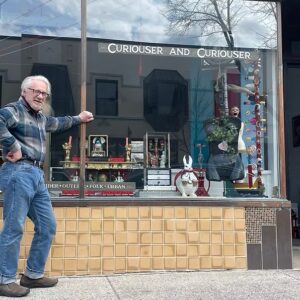
Barry Ferst

Professor Emeritus of Philosophy at Carroll College, Barry Ferst grew up on Chicago’s south side. He earned a doctorate in philosophy from Tulane University and began teaching at Carroll College in 1980. Upon his retirement in 2023-ish, Barry leaves there a legacy, including the Honors Scholars program, a thriving philosophy department, an established speaker’s series, and a collection of unique community-campus programs that integrate thought, science and the arts around timely issues. In additon to his career as an educator, Barry is also an artist who most known for his kitsch art and local shop “Curious and Curiouser” – featured on KTVH – that is filled with his own 3D collages and a universe of unusual and bizarre curios and pop-culture works. Barry also writes short stories that explore fantastical alternate realities peopled with idiosyncratic human characters and has authored numerous scholarly works, including his most recent contribution Stone Sarcophagi of the Roman Empire (exLibris: 2018) inspired by a fifteen-year plus quest to document all the extant Roman stone sarcophaguses that led him from Moscow to Marrakech and from Copenhagen to Cairo, photographing in museums and along ancient decumani.  A lover of wisdom and art, Barry’s philosophical concentrations include ancient philosophy, aesthetics, and philosophy of mind.  His popular culture interests include American religious history, fashion and evolving lifestyles.  All appear in his several publications.

Christina Barbachano

Christina Barbachano has loved her wandering life on this planet, which has landed her in Montana with her husband and two children. Montana is the closest thing to home she knows as her mother is a 4th generation Montanan. Christina lived most of her childhood abroad where her history-loving father helped her find beauty in the landscapes, cultures and art of western Europe. She earned her BFA in Sculpture from Moore College of Art and Design in Philadelphia in1998 and went straight to graduate school at Mills College in Oakland, CA where she
received her MFA in Studio Art with an emphasis in Sculpture. While in California, she met her husband, Alex Bolotsky, an artist and craftsman in his own right. At Mills she was embedded in all of the MFA programs and worked collaboratively with a diverse group of artists including dancers, musicians, writers and performers of many kinds. She grew up writing, dancing, and playing many instruments. Christina is inspired by color and vibration, texture and tactile surfaces, the inner and outer landscapes, and memory and time. She has a love of birds, lichen, open prairies that meet the mountains, and sacred rivers. Her artwork has explored tiny things that grow where it’s unexpected or unnoticed, the wild entanglement of all living things, birds, reproductive issues, insects, spines and backs, wings, landscapes and topography, maps, the figure, political arenas in Latin America, and feminism. She works in clay, paint, collage, mixed-media, textiles and out in the environment. Somehow, as divergent as all these concepts and media seem, her work is still highly personal and biographical. The exploration of process, space, materials, rhythm, and vibration are dominant in her studio practice. She has exhibited, curated and performed in many venues and countries for 30 years and is always looking for other artistic spirits with whom she can collaborate, create, and support. This wandering life has most recently brought her to Helena where she serves as the Executive Director of the Holter Museum of Art.

BONUS EVENT

Outside of our main Art as Transformation event (described above), we also have a fun bonus program scheduled for the following night that is sure to have you in stitches. Think of it as the perfect kind of night cap to our Art as Transformation project! Click on the arrow below to get a quick sneak peek or visit our Building Community through Laughter: Comedy & the Good Life.

“Building Community through Laughter: Comedy & the Good Life”

Our “Building Community through Laughter” program involves a live performance by professional comedian and philosopher, Rodney Norman, followed by a fun talk back facilitated by community philosophers, Marisa Diaz-Waian and Mitch Conway. In both the performance and conversation, audience members will be invited to consider themes like identity, perception, courage, love, friendship, justice, happiness, and community through the lens of comedy (and Norman’s delightfully disarming vulnerability and storytelling ability). In the process, we’ll learn about some of the philosophical inspirations behind Norman’s work, creative process & style, the source of his boundless joy, and his view on the relationship between comedy and the good life, and why the arts & humanities matter.

Our “Art as Transformation” project is dedicated to David Spencer — Friend, Mentor, Lover of the Arts & Philosophy, Inspiration, Butterfly.

Marisa diaz-waian, merlin ccc founder & Director
PROJECT SPONSORS & COMMUNITY PARTNERS

We are grateful to our grantors & community partners for their support of our organization, philosophy in the community, and this project.

Similar Posts