On Growth, Wildlife & the Environment
On Growth, Wildlife & the Environment
with guest scholars Christopher Preston & Robert Frodeman
Symposium description & what we explored
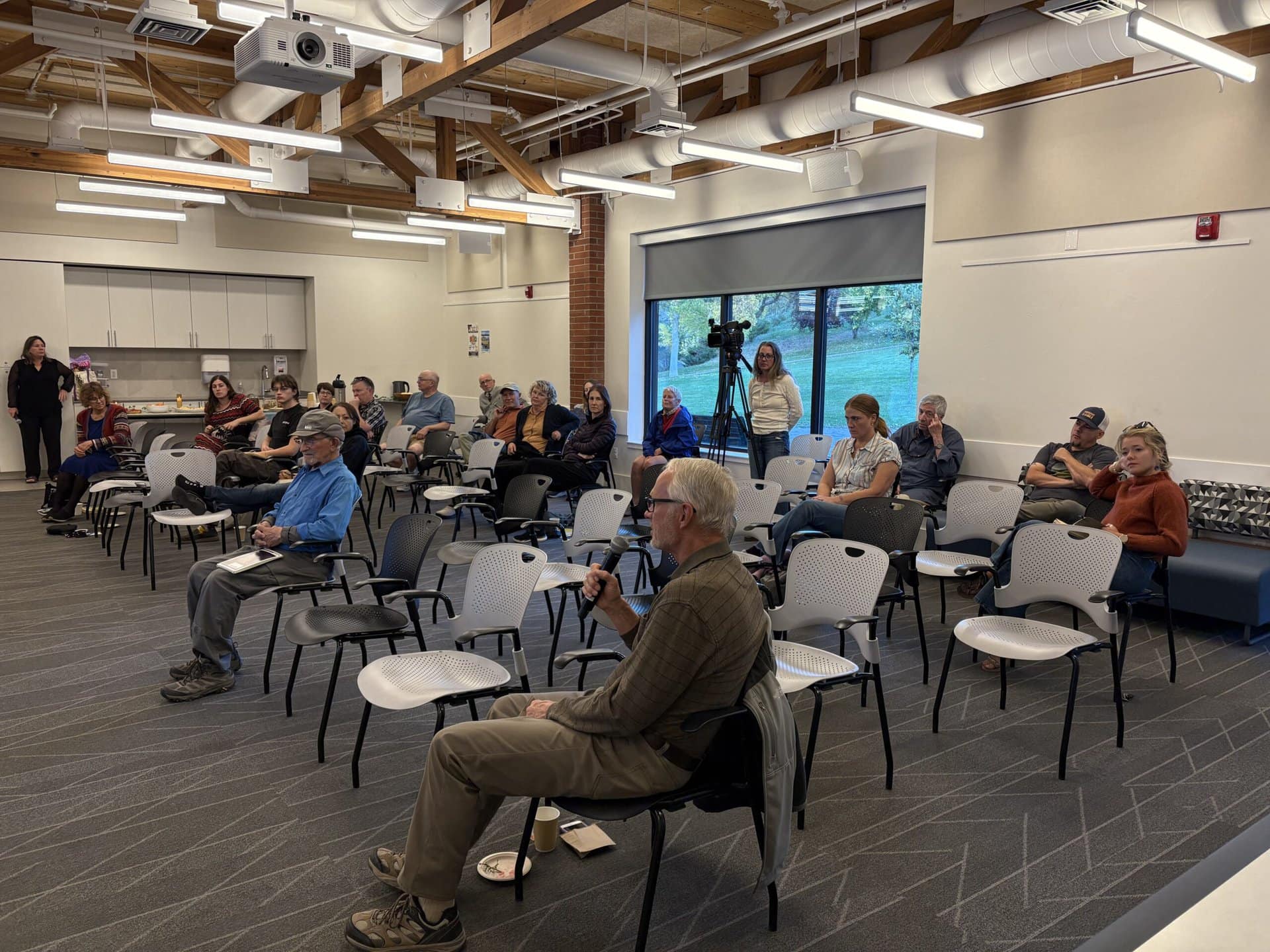
In this mini-symposium facilitated by community philosopher Marisa Diaz-Waian we talked with guest panelists and authors Christopher Preston & Robert Frodeman about growth policy and development, wildlife, and the environment. The symposium was a collborative effort with the Lewis & Clark Library (as part of their NEA Big Reads grant programming), and was structured in a way that allowed time for panelists to share their work respond to facilitator questions, offered ample time for community Q & A, as well as an opportunity to mingle with the authors/scholars after the community conversation.
Some Questions to the Guest Panelists by the Facilitator
To both panelists:
- Both of you have authored books (and other published works within the socio-environmental arena) that cover a number of issues, ranging from – in the case of you (Christopher) technology, wildlife, climate change, conservation, justice (and more); and you (Robert) science & technology policy, water issues, growth/housing policies, conservation, social epistemology (and more). To the extent that it’s possible to identify ONE OR TWO of the most important priorities of our time – “strands of the web” that stand out to you as the most critical to focus on when thinking about “living well” and “living well together” – what would those be? And how do those fit into the work that you’re doing?
To Robert Frodeman:
- Earlier this year, we held a similar symposium with two panelists — one of whom is a colleague of yours, Eveyln Brister. In preparing for our discussion, I was intrigued by a conversation she and I had about limits. Specifically—when we’re thinking about solutions to social and ecological problems – she mentioned that the idea of ‘overcoming’ limits is problematic. That we need to scrap that. Instead, she argued, if we want to respond to/address the challenges in our midst and find solutions, it is crucial that we not only accept limits, but even more strongly, that we accept “finitude” as part of the human condition. I can see the direct links between accepting limits and moving away from models of endless growth. But accepting our own finitude is a bigger thing. I am wondering if you can tease this stronger sense of acceptance out some as it relates to this paradigm shift that you are talking about.
- Temporarily bracketing the paradigm shift away from endless growth that you’ve been discussing (but keeping that as an aim and something we ought to be striving for) — I’m wondering how communities might address growth that is currently happening in their areas due to increased populations and demands, or other factors. How do we deal with the here and now with what is currently on our plate when it comes to growth? Can you give some examples of places where growth policies established (or lack thereof) has gone terribly wrong and how/why? And some where it’s gone right and how/why?
to Christopher Preston:
- In the wildlife corridor article that you authored and reference in your presentation, you mentioned that Lisa Upson (the Director of the People and Carnivores organization) isn’t out “to change people’s values” (about Grizzlies) but instead “to provide tools for successful cohabitation.” To me, this raises a possible interesting tension between sustainability practices/approaches for addressing socio-ecological issues between: (a) approaches or responses that are geared toward large-scale changes in a society’s values (e.g., Robert’s paradigm shift away from endless growth) versus, (b) approaches or responses that are, perhaps, more “bite-by-bite” in form (e.g., tools for cohabitation like wildlife corridors, conflict prevention measures, etc.). Both seem critical to me for addressing many of the issues we’re facing and I’m curious how they interplay: (1) Am I way off in thinking about these as distinct approaches? (2) When value shifts happen, it seems reasonable to suggest that whatever practices we adopt will be inspired by (aligned with) those values. But what if we’re not there yet as a society in our values? Can “tools for cohabitation” practices lead to value shifts? And, even if they don’t, does it matter? Should they still be things we ought to pursue?
Thank you to our guest panelists, Christopher Preston & Robert Frodeman, for all of your hard work preparing for this symposium and the wonderful dialogue you helped to inspire!
Symposium Presentations & Community Discussion

About Our Guest Scholars

Christopher Preston is a an award-winning author, environmental philosopher, public speaker, and clean energy enthusiast based in Missoula, Montana. A Professor of Philosophy at the University of Montana, his areas of specialty include environmental philosophy, climate ethics, the ethics of emerging technologies, rewilding, and feminist philosophy. A native of England – who has studied and worked in Colorado, Alaska, Oregon, Washington DC, and South Carolina – his life in the US is oriented in many ways around the power of wild landscapes.
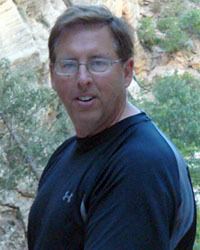
Robert Frodeman writes on environmental philosophy and public policy, the philosophy of science and technology, and the future of the university. A graduate of St Louis University (history and philosophy, 1981), holder of a PhD in Philosophy (Penn State, 1988) and a MS in Geology (climate science, CU-Boulder, 1996), Frodeman is the author or editor of 15 books and more than 150 articles, and has been awarded more than 5 million dollars in grants. Founding Director of the Center for the Study of Interdisciplinarity at the University of North Texas (2008), he has also held academic positions at the University of Colorado and the Colorado School of Mines, and ran the Socrates Untenured series at the journal Issues in Science and Technology from 2017 – 2021.
Photos


Community Partners, Sponsors & Thank You’s
Thank you to our community partners, Helena Civic Television, Doubletree by Hilton Helena Downtown, and Helena BID, and program sponsor & co-host, Lewis & Clark Library for your support! Thank you also to Jane Drexler (visiting philosopher from Salt Lake Community College) and the Helena community for coming out and helping to make the program a success!