

Philosophy Workshop: Nothing More than Feelings? Emotion & the Good Life
March 25 @ 6:00 pm – 8:30 pm
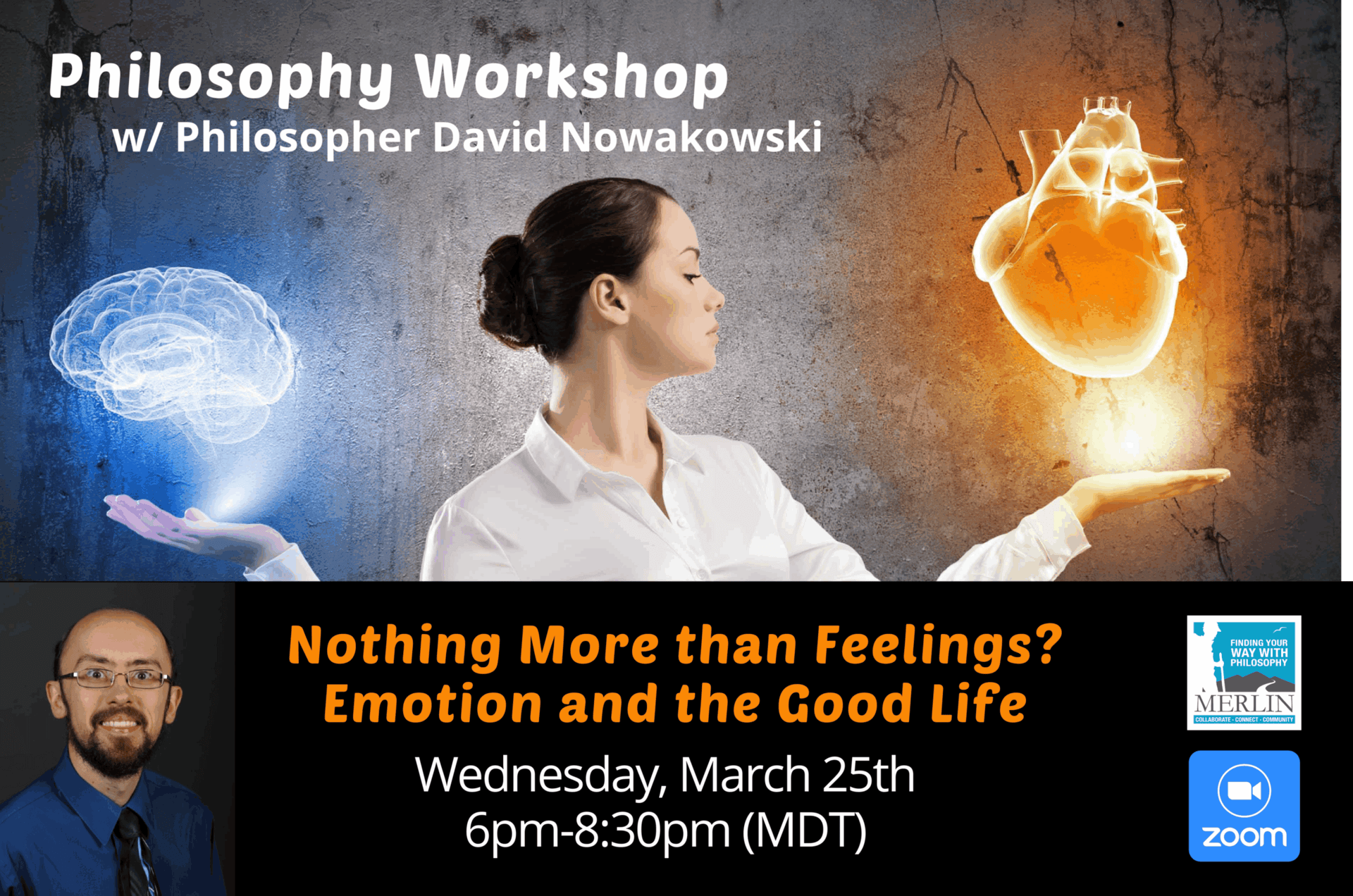
What We’ll Explore
Many philosophers of the ancient world — notably, though not exclusively, among the Stoics — took a rather dim view of emotions, or “the passions,” preferring to cultivate lives of deliberate, active choice, rather than being passively buffeted about by feelings and promptings of the external world.
This often leads to one of two reactions on the part of modern readers. On the one hand, there’s the caricature of the Silicon Valley tech bros, who think that an ancient Roman Emperor gave them permission not to care about the well-being of others. Marcus Aurelius and his fellow Stoics said nothing of the kind, but nevertheless, this gives rise to the second reaction: those who identify very closely with their emotions, and fear that an ethic of freedom from the passions would be dull, lackluster, or less than human.
In this evening’s Zoom program, we’ll try to carve out a middle ground between these two reactions, and recover something closer to what the classical Greek philosophers were aiming at: an approach in which gaining control of the passions, rather than being enslaved by them, allows us to act more effectively and responsibly for the well-being of ourselves, our loved ones, and world around us. We’ll consider place of duty and habit in forming our character, and the need for agency in responding appropriately to the challenges of human life. We’ll try to understand exactly where the ancient thinkers would see both modern reactions as making an error, and reflect together on what we can learn from their third perspective.
WHEN & WHERE

Wednesday, March 25th
6pm-8:30pm (MST)
via Zoom

ZOOM INFO
You will receive the Zoom info with your RSVP

COST
Free (Donations appreciated)
About Our Discussion Facilitator

David Nowakowski is a community philosopher and educator whose professional work is dedicated to helping people of all ages and backgrounds access, understand, and apply the traditions of ancient philosophy to their own lives. David began studying ancient philosophies and classical languages in 2001 and has continued ever since.
Thank you to Our Community Partners